Setting Healthy Boundaries as a Caregiver for a Disabled Teen

Some days, the hardest part of caregiving isn’t the appointment schedule, the medication reminders, the school emails, or the physical help. It’s saying, “I love you, and I’m not available for that right now.”
That sentence can feel heavy.
When you’re caring for a disabled teen, boundaries can stir up guilt fast. You might wonder if you’re being selfish. You might worry your teen will feel rejected. You might also know, deep down, that constantly bending past your limit isn’t helping either of you.
Healthy boundaries are not walls. They’re the guardrails that help both the caregiver and the teen feel safer, calmer, and more respected. They make room for care without making life revolve around crisis mode every hour of the day.
This post is informational and supportive, not medical or legal advice. Every teen’s needs are different, so adapt these ideas to fit your family, care team, and safety needs.
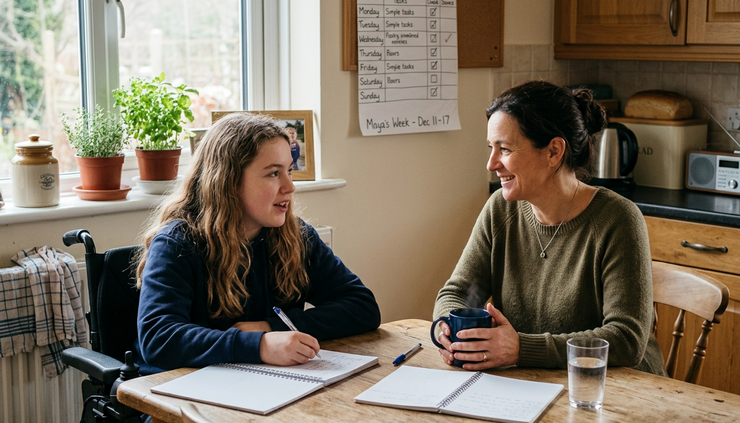
Boundaries help teens build trust and independence
Teen years are full of push and pull. A teen wants privacy, control, and respect. A caregiver needs cooperation, safety, and some level of predictability. Disability can make that push and pull more complicated, but it doesn’t erase the need for normal teenage growth.
A disabled teen may need help with personal care, mobility, communication, schoolwork, medication, emotional regulation, or transportation. That help can be intimate and constant. Without boundaries, the relationship can start to feel like one long task list.
The teen may feel watched all the time. The caregiver may feel on call all the time. Both can become resentful, even when there’s a lot of love.
Clear boundaries help answer questions like:
When does a teen get privacy?
When does safety override privacy?
What help is required, and what help can be offered by request?
What tone of voice is okay during stressful moments?
When is the caregiver off duty, even if they’re still nearby?
What choices belong to the teen?
Boundaries also teach something powerful. They show the teen that relationships can include care and respect.
For example, a teen who needs help showering or dressing may still get choices. They can choose the time of day, the towel they like, the music playing, or whether instructions are spoken or written. A teen who needs reminders for medication may help choose the reminder system. That might be a phone alarm, a visual checklist, or a calm verbal cue.
The goal isn’t total independence overnight. The goal is shared dignity.
A caregiver named “Renee,” in a composite example based on common family experiences, cared for her 15-year-old son after a spinal cord injury. She was nervous about giving him privacy because transfers and skin checks mattered for his health. At first, she hovered. He snapped. She cried in the laundry room more than once.
Their turning point came when they separated privacy from safety.
He got private time in his room with the door closed. She knocked every time unless there was an emergency. For health tasks, they made a short checklist together and agreed on two set times a day. He still needed support, but he knew when it was coming, and she wasn’t constantly peeking in “just to be sure.”
Nothing magical happened. They still had hard days. But the tension dropped because the boundary was clear.
Caregiver boundaries matter just as much as teen boundaries
Caregivers often get praised for being selfless. That sounds nice, but it can become a trap.
A caregiver who never rests may become short-tempered, forgetful, anxious, or numb. A caregiver who always says yes may start feeling invisible. A caregiver who has no private time may begin to dread the sound of their own name being called from another room.
That doesn’t mean the caregiver doesn’t love their teen. It means they’re human.
Self-care gets talked about like it’s bubble baths and candles. Sometimes those are lovely. But for a caregiver, self-care is often more basic:
Eating a real meal
Sleeping when possible
Going to a doctor’s appointment
Taking a walk alone
Sitting in silence for 10 minutes
Asking someone else to handle one task
Letting a teen be frustrated without rushing to fix it
Healthy caregiver boundaries may sound like:
“I can help with that after I finish eating.”
“I’m going to take 20 minutes in my room. If it’s urgent, knock once and tell me what’s wrong.”
“I won’t continue this conversation while we’re yelling. I’ll come back in five minutes.”
“I can drive you to one activity this weekend, not three.”
“I know you’re upset, and I’m still not changing my answer.”
These limits can feel strange if the family is used to constant access. A teen may push back at first. That doesn’t mean the boundary is wrong. It may mean the boundary is new.
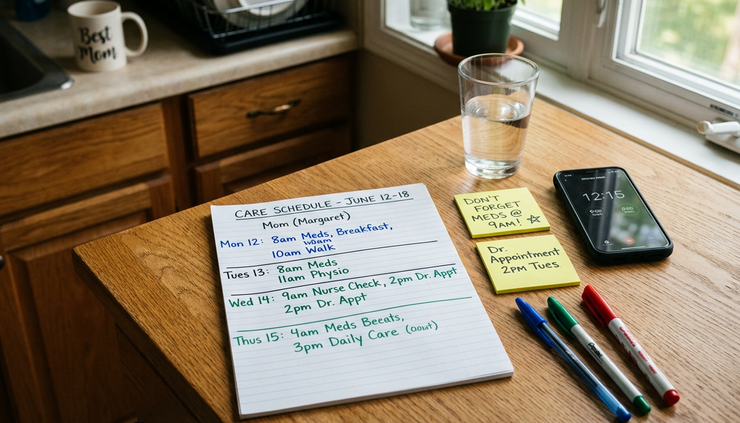
One caregiver shared that their biggest boundary was “no problem-solving after 10 p.m. unless someone is unsafe.” Their teen often wanted to process school stress late at night. The talks mattered, but the timing left everyone exhausted.
So they created a new rhythm. The teen could write or record thoughts at night. The caregiver would listen or read the next day after breakfast. If the teen felt unsafe, that was different, and they had a plan for that.
At first, the teen said it felt unfair. After a few weeks, they admitted the morning conversations went better. The caregiver was more patient. The teen was less flooded. The boundary didn’t remove support. It made support more useful.
Clear communication keeps boundaries from feeling like punishment
A boundary that appears during a fight can sound like rejection, even when it isn’t meant that way. That’s why timing matters.
The best time to talk about boundaries is usually when everyone is regulated enough to listen. Not during a meltdown. Not while someone is in pain. Not when the bus is coming in six minutes.
Try starting with care before correction.
You might say:
“I want us to have less fighting around morning routines. I also want you to have more say. Can we talk about what would help?”
Or:
“I’ve noticed I’m getting overwhelmed when I’m interrupted during work calls. I don’t want to snap at you. Let’s make a plan for what counts as urgent.”
Boundaries land better when they are specific. “Respect me” is too vague. “Please knock before coming into the bathroom” is clear. “Stop being rude” is hard to measure. “I’ll listen when your voice is at a normal volume” gives a path back.
A helpful boundary has three parts:
What the boundary is
“I need 30 minutes after dinner without requests unless it’s urgent.”
Why it matters
“That helps me reset so I can be calmer later.”
What will happen next
“If it’s not urgent, write it on the list and we’ll talk at 7:30.”
For teens with communication differences, make boundaries visible and concrete. Spoken reminders may disappear into the noise of the day. Visual supports can help.
Try:
A whiteboard with “available” and “not available” times
A red, yellow, green card system for energy levels
A shared phone note for non-urgent requests
A picture schedule for personal care routines
A short script for asking for space
A timer that shows when the caregiver will return
One teen with autism and chronic pain struggled when plans changed without warning. Their caregiver often needed to adjust routines because pain flares were unpredictable. The teen read every change as “you don’t care what I want.”
They made a “change script” together:
“Plan changed. The reason is pain, time, or safety. Your choices are A or B. We’ll talk about feelings after the next step.”
It sounded almost too simple. But in the moment, simple helped. The teen knew what was happening. The caregiver didn’t have to invent words while stressed. The boundary became predictable, not personal.

Practical boundaries can cover privacy, time, care tasks, and emotions
It helps to sort boundaries into real-life areas. That way, they don’t stay as a nice idea. They become part of the week.
Privacy boundaries protect dignity
Privacy can be tricky when a teen needs hands-on help. Still, privacy should not disappear.
Consider boundaries like:
Knock before entering a bedroom or bathroom.
Ask before touching mobility aids, medical equipment, or personal items.
Give the teen private time with friends when safe.
Let the teen choose who helps with certain care tasks when options exist.
Avoid discussing the teen’s body, symptoms, or behavior in front of others without permission, unless safety requires it.
A simple question can change the feel of care: “Do you want help now, or do you want to try first?”
That question tells the teen they are still the main person in their own body.
Time boundaries prevent the day from becoming one long emergency
Some needs can’t wait. Many can.
Families often benefit from sorting requests into categories:
Urgent needs
Soon needs
Later needs
Safety issue, severe pain, medication concern, bathroom need, emotional crisis
Homework help, meal request, schedule question, charging equipment
Shopping preferences, weekend plans, non-urgent forms, room setup ideas
This isn’t about ignoring the teen. It’s about teaching pacing. It also helps the caregiver avoid running from one non-urgent request to another all day.
Families using homecare, nursing, respite, or school support may want to use the same categories with everyone involved. In many online searches, people use terms like teenagers, disabled, caregivers, homecare, nursing, respite because they’re trying to find backup before burnout takes over. Shared language can make that backup easier to coordinate.
Care task boundaries reduce power struggles
Care tasks can become battlegrounds when teens feel controlled and caregivers feel responsible.
Try turning repeated conflicts into agreements.
For example:
Medication reminders happen at set times, not randomly all evening.
The teen can choose the order of hygiene tasks.
The caregiver gives one reminder, then uses a written checklist.
The teen gets a five-minute warning before transitions.
Refusal has a planned response, not a fresh argument every time.
If safety is involved, be honest. A boundary can be firm and kind.
“I hear that you don’t want to do this. I’m still required to help with it because it keeps you safe. Do you want music or quiet while we do it?”
That gives choice without pretending everything is optional.
Emotional boundaries keep conflict from taking over
Teens have big feelings. Disabled teens may also carry grief, frustration, pain, fatigue, sensory overload, or trauma from medical experiences. Those feelings deserve care.
At the same time, caregivers don’t have to accept insults, threats, or constant emotional dumping.
A healthy emotional boundary may sound like:
“I care about what you’re feeling. I won’t stay in the room while you call me names. I’ll come back in three minutes.”
Or:
“I can listen for 15 minutes right now. After that, I need to finish dinner. We can talk again at 8.”
This teaches a teen that emotions are allowed, but harm is not.
Self-care works best when it is planned before the breaking point
Waiting until burnout is severe makes everything harder. A self-care plan doesn’t need to be fancy. It needs to be realistic.
Start with the smallest repeatable rest.
Maybe it’s 10 minutes in the car after school pickup before entering the house. Maybe it’s a neighbor sitting nearby once a week while the caregiver walks around the block. Maybe it’s ordering groceries instead of walking every aisle. Maybe it’s arranging respite care before the next crisis, if that’s available.
Self-care also includes emotional honesty. Caregiving can bring love, tenderness, pride, boredom, anger, fear, resentment, and joy, sometimes in the same afternoon. Having hard feelings doesn’t make someone a bad caregiver.
A quick check-in can help:
What am I feeling right now?
What do I need in the next hour?
What can wait?
Who can help with one thing?
What boundary have I let slide because I’m tired?
One caregiver kept saying yes to late-night laundry because their teen needed specific clothing textures and would panic if the right clothes weren’t clean. The caregiver was staying up past midnight several nights a week.
They worked together on a clothing system. The teen chose five preferred outfits. The caregiver put a small laundry basket in the teen’s room for those items only. Laundry happened on Monday, Wednesday, and Saturday, not at midnight. If the teen forgot to put clothes in the basket, they had backup options.
There were still complaints. But the caregiver stopped losing sleep over preventable laundry emergencies. The teen learned a manageable routine. That’s a boundary doing its job.

Boundary repair matters when things go badly
Even with good plans, people snap. A caregiver may yell. A teen may refuse everything. A boundary may come out too harsh. A hard day may undo a week of progress.
Repair is part of the process.
Repair doesn’t mean dropping the boundary. It means reconnecting after the conflict.
Try language like:
“I’m sorry I raised my voice. The boundary is still the same, but I want to say it more calmly.”
Or:
“That went badly. Let’s reset. You need privacy, and I need to know you’re safe. How can we do both next time?”
Or:
“I took over when I should have asked. I’ll try again.”
Repair teaches accountability. It also shows the teen that conflict doesn’t have to destroy connection.
A small family meeting once a week can help. Keep it short. Ask three questions:
What worked this week?
What felt unfair or stressful?
What’s one small change we can try?
Don’t try to fix every issue at once. Pick one boundary and practice it. Then pick another.
Healthy boundaries grow through repetition. They may feel awkward before they feel natural. That’s okay. Most good family habits start out a little clunky.
The heart of boundary-setting is this: the caregiver’s needs matter, and the teen’s dignity matters. One does not cancel out the other.
Start with one place where the day keeps breaking down. Name the need. Make the boundary specific. Write it down if that helps. Expect some resistance. Offer choices where you can. Stay firm where safety requires it. Repair when needed.
Caregiving a disabled teen can ask a lot from a person. Boundaries won’t make it easy, but they can make it more honest, more respectful, and more livable for everyone in the home.
Comments